redesign | ux: How would you improve this Google Maps experience?

This quiz if focused on the items shown in the picture, specifically Budget and Avis. (Judging from the Twitter answers, that was unclear.)

Frequent travelers often rent cars. This involves picking up the car and eventually returning the car. Google could automatically track where you began your rental (in my case, Avis). When you want to return to the airport, instead of directing you to the airport terminal, it could automatically guide you back to the rental car return. One way to do this is to use GPS trace data. i.e. look at the paths of people who have rented from Avis and look at where they return the car.

Bonus points for showing me the last gas station on the route so that I don’t get stuck paying $9 a gallon to have the car rental company refill the tank. (Travel tip: You should almost never accept the prepaid fuel option.)

Some Twitter answers that reflect other issues with Google Maps.

https://twitter.com/Very_QC/status/555793461761564673

Travel gear 2007 vs. 2015

I’ve been traveling all of my professional life. As the years have passed, so have the tools I use when I travel.

Here are my 2007 travel gadgets:

442750811_d38cc67920_b

And now:

IMG_20150111_101218Many of the things in the top picture have been consolidated into my iPhone 6:

  • Garmin navigation GPS/Palm.
  • Garmin hiking GPS.
  • iPod.
  • Phone.
  • USB sticks (I just mail or cloud the contents).

Others have been obviated by technology. I no longer carry Ethernet cables or the router to provide WiFi for me.

My current line up includes:

  • GoPro and accessories. (This is a ski trip; not taken for pure business trips.)
  • A bunch of cables and accessories stored in a GridIt.
  • A Lumix DMC-FZ70. 60x optical zoom FTW. (Don’t usually bring my DSLR.)
  • A power strip. Great for sharing power with others at airports.
  • A SOL Republic Punk speaker. (It’s smaller than a Jambox.)
  • A nano SIM cutter. I use this only on international trips, but it’s small enough to leave in my travel bag.
  • Car power adapter. Always be charging!
  • A 5-port USB charger. Always be charging! This one has a separate cable to deal with tricky hotel room situations.
  • Massive Mophie. Always be charging!
  • LiveScribe 3. It’s the real deal for note taking and syncs great with Evernote.
  • An Asus Chromebook. Unlike my MacBook Air, I won’t be heartbroken if I lose it at security.
  • iPad mini 3.
  • iPhone 6.

I’d probably ditch the Chromebook, but Google gives you 12 free gogo passes with each Chromebook. That alone is worth more than the cost of the Chromebook. Having it lets me stay productive in the air.

redesign | tech: My top 10 evaluation criteria for a smart watch

Connect button

I’ve been testing both Pebble Steel and Motorola’s Moto 360 for the past few days. That’s got me thinking about what’s important to me in a smart watch. My top 10 evaluation criteria for a smart watch are:

  1. Compatibility with iOS, as my primary phone is the iPhone 6.
  2. Battery life.
  3. Notifications of important events. I find the most valuable part of a smart watch is the ability to discreetly check email and phone calls. I was in a meeting with a Pebble VC last month and neither of us noticed that we had been checking our watches.
  4. Price.
  5. Style.
  6. Ease of use.
  7. Fitness features such as step counting and heart rate.
  8. Lack of annoyance to others.
  9. Ability to change style quickly (i.e., from fancy occasions to casual outings).
  10. Tells the time.

I haven’t worn a watch regularly since 1998, but I’m willing to start for the right smart watch.

What am I missing? What is important to you in a smart watch?

Connect button

redesign | work: Distributed workforces are a win for companies, teams and the environment

There’s been some discussion lately about the pros and cons of distributed workforces. Paul Graham says no. Matt Mullenweg says yes.

I’m firmly in the yes camp. I find it ironic that companies that build tools that allow people around the world to communicate and collaborate insist that their employees endure commutes of 3 to 4 hours a day to develop those tools. These are often the same companies that use contract developers in the Ukraine and India, call center employees in the Philippines and manufacturers in China.

It’s the height of arrogance to believe that all of the smart people in the world live within a 50-mile radius of San Francisco.

If you build an exceptional team and empower them, you get a lot of benefits:

  • Cheaper team. People don’t have to pay $3,500 a month to live in a shoebox in San Francisco, so they don’t have to be paid as much.
  • Cheaper office space. You’re not competing with zillions of venture-funded startups all vying for the same limited office space in San Francisco or the valley.
  • Easier recruiting.  You have the entire world to draw from, not just people who are nearby.
  • Better retention. Google, Facebook and every startup aren’t trying to poach your team every other day. A lot of people value flexibility a great deal. If you can provide flexibility that others can’t or won’t, you have a big competitive advantage.
  • A happier team. Commuting is one of the greatest frustrations for working people.

The biggest benefit, which no one talks about, is connection with the broader market. At a time when many startups are building companies that can only succeed in affluent, tech-savvy markets like San Francisco, being connected with the rest of the country and the world is critical.

The United States is a very diverse country with people living in rural, suburban and urban markets. A lot of people live in poverty — and a lot more live on substantially less money than people in the Bay Area make.

Some companies will do “market research” by way of a focus group in which a few execs go to flyover country and “watch” people from behind glass talk about their lives. (I say “watch” because, in my experience at Microsoft and AOL, most of the execs who showed up were too busy emailing and IMing to pay attention.)

Having a distributed team makes every day an opportunity for market research.You can draw on the real-life interactions of your team to help inform your product instead of people who are showing up for $100 and pizza.

There are also environmental benefits. Company shuttles have dramatically reduced the effect that commuting would otherwise have, but there are still lots of those shuttles. And many employees don’t use them. Beyond fuel and CO2 emissions, there is the wear and tear on roads.

Our current notion of a company is largely a relic of the industrial age, when the means of production became concentrated. Now the means of production are in our pockets and laptop bags.

Instead of building workforces like we did in the 19th century, we should be building for the 21st century.

redesign | transport: Uber should make safety a selling point

It seems not a day goes by recently that there isn’t bad news about Uber. There was was the driver in Delhi, the Sydney fiasco and most recently assaults by a driver in Boston. Some of the bad news is of Uber’s making; others are inherent in running a rapidly growing business at global scale with tens of thousands of independent actors.

All of this has added up to segment after segment on CNN bruising the company’s once stellar image. The company’s ineptness at PR exceeds even the depths of Groupon’s idiocy in its heyday.

Uber has failed to understand that as the company has grown, so have the expectations of consumers, regulators and the media. A 20-something male in San Francisco will be much more forgiving than a 45-year old mom with toddler in tow in Minneapolis. Regulators are more likely to let a startup slide than a company that is worth $40 billion.

There is also an irrationality to the marketplace that Uber can’t avoid (nor should it bring it up): even though Uber might be statistically safer, it suffers from the negative externality of the collection of bad experiences by independent operators. Most cab companies don’t operate at even a national level, much less a global one. People don’t associate taxi drivers with a specific brand; but they associate Uber drivers with Uber.

Given the structure of Uber model, Uber is undoubtedly safer than traditional taxis. But “we only have sexual assaults once a week” is not a message that you can sell.

There are ways to do much better. And Uber has taken a bizarre approach. Rather than be proactive and use its war chest to build a better, safer product, Uber prefers to wait until something bad happens and then reacts to it slowly. (After first saying, “not our fault! independent drivers!”)

Being proactive would allow Uber to claim the moral high ground. And because it has more resources than Lyft, put further strain on Lyft to catch up.

Uber’s next step should be to create the gold standard of safety and share those plans. It’s not just great for PR — it’s great for passengers, the business and for the world.

I’ve long thought that Uber would have a sizable market with a product like Uber for Parents — playing soccer mom and car pool driver. But that sure as hell can’t happen until the current perceptions of Uber safety continue.

Improving Amazon’s GC

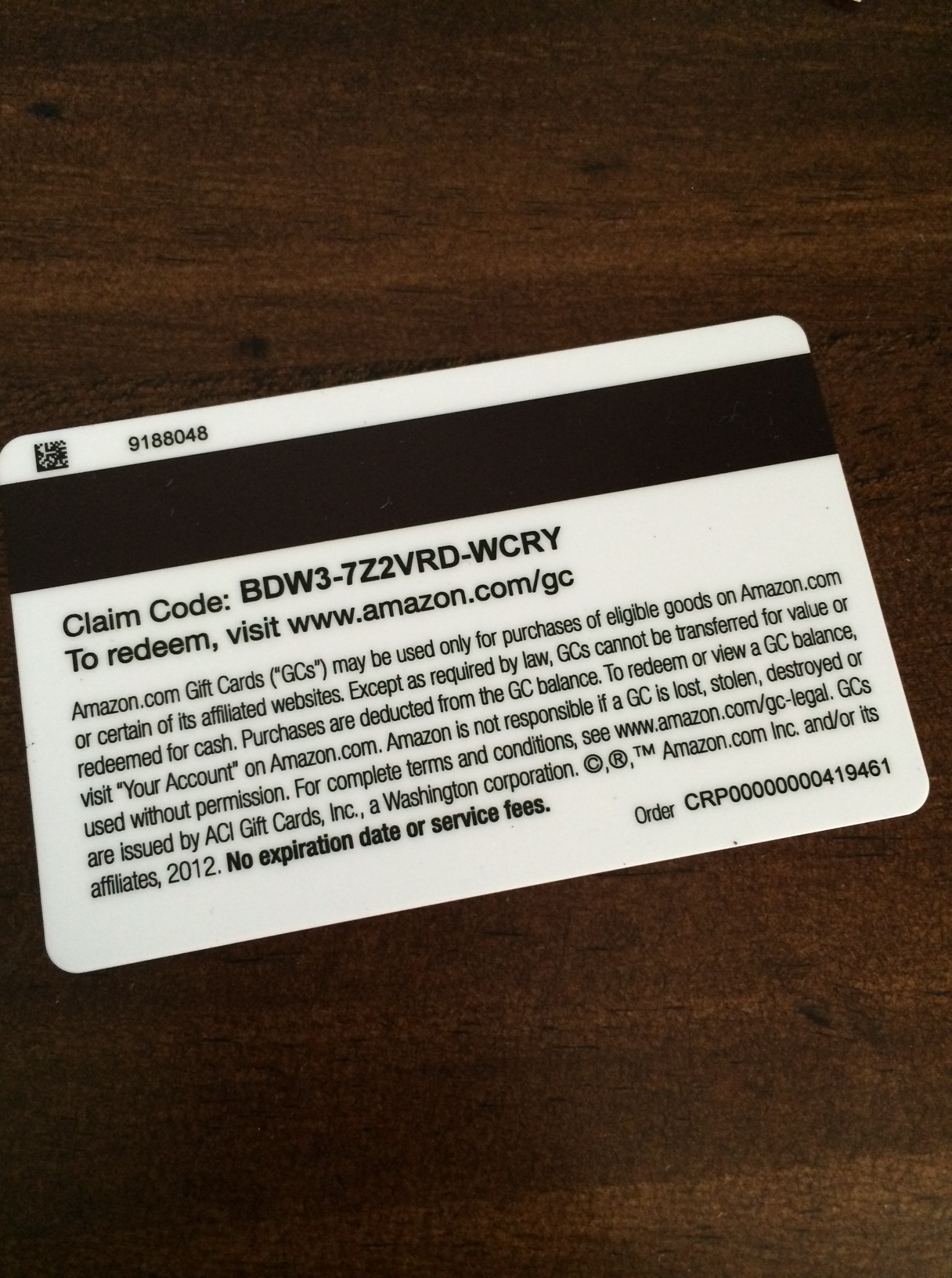
Supposedly the Amazon app can scan real world objects. But Amazon requires you to manually enter the claim code. You should be able to scan a bar code or QR code to automatically apply the code to your account after logging in. OCR technology is also good enough that you should be able to scan the text as printed.

Amazon has a wide range of gift card products. Some of the responses focused on emailing gift cards and doing things electronically. Amazon already does that.

But Amazon also offers gift cards at retail and through incentive programs. This particular gift card was received through a credit card rewards program. I’m not exactly sure what the magnetic stripe is for, because I can’t swipe it on my computer. My best guess is that it’s for activation.

This particular card doesn’t have the scratch off; cards sold at retail do. (There used to be gift card fraud where crooks would copy down activation codes and wait for them to be activated.)

  • Print the card on card stock so it can be recycled or biodegrade. Whole Foods does this with their gift cards. I’ve seen other gift cards made of a plasticky corn based product.
  • Use all alphabetic characters. The intermingling of numbers and letters makes entering the code on mobile devices especially hard because you have to toggle between keyboards.
  • Make the print of the redemption code larger so that older folks or folks with vision issues can more easily read it.

iTunes already does this, making it easy to redeem Starbucks app and song of the week codes.

redesignQuiz: What is the worst flaw in these icons?

Difficulty: Easy to moderate

These are the icons for Software Update Microsoft System Center Configuration Manager 2007, from http://technet.microsoft.com/en-us/library/bb632404.aspx

They are meant to show the states for Normal, Superseded, Expired, Invalid, and Meta-data only software updates.

What is the worst flaw in these icons?


IC17338-2 IC89827IC152799 IC566283IC111350


Provide your answer here.


redesignQuiz: Why was this used car purchase a bad buy?

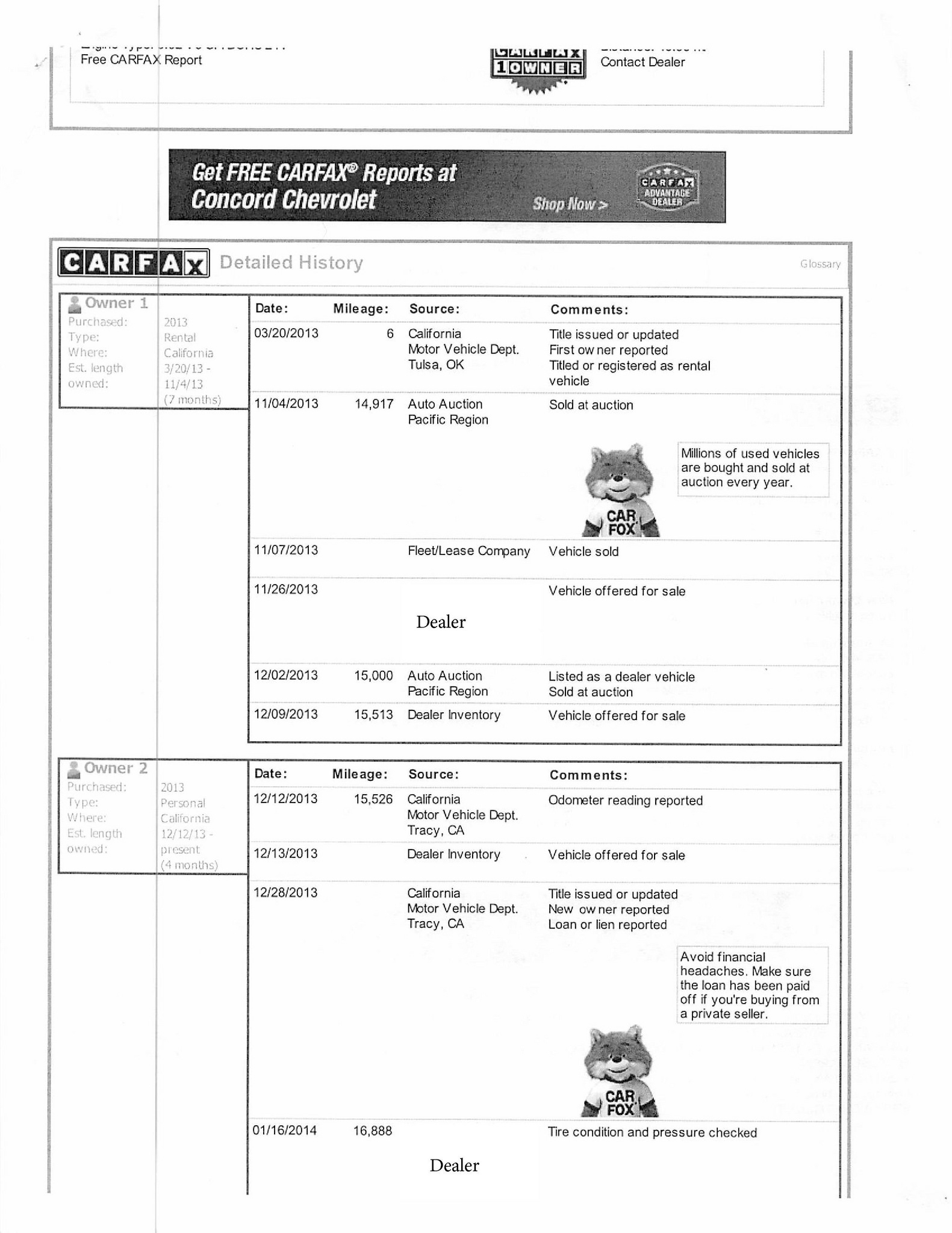
The image below is a CarFax report showing the title history of a used car recently purchased by an acquaintance. CarFax, in case you do not know, is the current industry leader providing auto title histories to consumers and dealers alike. CarFax markets itself as providing information that may impact the purchase decision of a car through a detailed VIN history.

For the purpose of this quiz, assume this car was sold at fair market value for a typical car of this make and model year. When I saw this CarFax report, I told my friend he should make all efforts to undo the deal immediately. There are at least two factors in this report that should have warned him away from purchasing this car for that price. List the factors and explain why this was a bad deal.

NOTE: I redacted the dealer’s name.


CarFax
CarFax


Submit your answer here.