You’re not doing text support right, if…

  • you don’t integrate with your ordering system. Customers should be able to navigate to an order and share that information within the chat. Amazon does a great job with this. Their self-service bot is one of the few that can actually resolve issues. Of the items on this list, this is the toughest to implement, but it’s also one of the most important.
  • don’t “ding” when the agent sends a response. Given how long some tasks and research takes, you need to be able to trigger a system sound that indicates that the agent has responded. Most consumers are multi-tasking, not staring at the chat window. Often the chat window will timeout and the customer will have to restart the chat and provide all of the information form the beginning. It’s a waste of user time and a waste of agent time.
  • don’t have agents read information that was provided, especially when an issue is transferred. The user shouldn’t have to retype and explain the problem. The agent can scroll back and get details, including the research done by the previous agent. This would be hard to do in real-time on a phone call because it’s too time consuming for the second agent to listen. On text, this is simple.
  • don’t give chat agents the authority to do what phone agents can do. Customers don’t want to spend 15 minutes with an agent only to be told they have to call. Then they have to navigate a phone menu designed to deflect them. Once they go through the process, they will have to explain the issue again.
  • don’t allow the user to upload photos. In many cases, a customer sending a picture or a screenshot provides a lot of information. Instead of customer saying “the item had a big dent on the right corner,” she can just upload a picture. I’ve had cases where the agent says “OK, go to Twitter, upload a picture of the item and then return to the chat.” Obviously this doesn’t work for people who don’t have Twitter.
  • get rid of the chat box when the customer switches pages on your site. Often they may be researching orders, alternative items, different flight, etc. They should be able to navigate without losing the chat. American Express keeps their chats persistent. Customers can go back and review chats about previous issues.
  • don’t automatically email me a transcript of the chat. When a chat is completed, the customer should receive an email with the exact conversation. Even better if you highlight the final action the agent is performing.
  • follow up on resolution after a few days. In many cases, I can only immediately comment on the politeness and perceived helpfulness of the agent. I don’t know if the actual issue is resolved until my plane ticket is re-issued, refund shows up on my credit card, item shows up at my door, etc.

Christmas Eve is the time for omnichannel to shine

Every day we get closer to Christmas, the more important omnichannel becomes. For those unfamiliar with the term, omnichannel is the seamless integration of online and physical commerce. For those in the business, it’s also called BOPIS: Buy Online, Pick-Up In Store.

Here’s the ideal omnichannel experience:

  • Search for the item on the retailer’s site or mobile app.
  • See real-time availability at stores near you.
  • Place the order with immediate confirmation.
  • Get a notification when the order is ready.
  • Find your way to the pick up spot.
  • Press a button in the app to indicate where you are waiting.
  • Someone from the store comes and brings it out to you.

I’ve been following omnichannel since before it became a word. The dearly departed Circuit City (closed in 2009) was an early leader in the experience. In one humorous experience, someone went to the check out register to purchase an item and was told that the item they were holding was out of stock. It was “out of stock” because I’d purchased it online and their system subtracted it from salable inventory!

Retailers have gotten better over the years as omnichannel has become more common, both at messaging and at execution. (Though the race condition will always exist. It’s near-impossible to guarantee that an employee will have a picked an item before a store shopper grabs it.)

In the past year, I’ve tried omnichannel experiences at Walmart, Target, Walgreen’s and Best Buy.

  • At Walmart, there wasn’t any signage that made it obvious where to go. I only found the pick up location by driving around the building. The items were brought out promptly, but one was damaged in a very obvious way that they should have noticed. Ideally there would be obvious signage in the parking lot and the app would navigate you directly to the pick up area.
  • At Target, an overworked employee took too long to bring the items out.
  • The experience was similar at Walgreens. She also had multiple orders in the shopping cart she brought out and had to separate the orders curbside.

Best Buy had the best experience: the item was brought out promptly, directly to my car.

Omnichannel provides a number of advantages over the traditional retail experience:

  • Consumers don’t have to deal with inclement weather. I liked not having to walk out in the rain to Best Buy.
  • For people with young children, it eliminates the hassle of unbuckling the kiddos from the car seat, getting them into the store and then reversing the process. And, of course, it eliminates the fighting over whether to buy candy in the checkout.
  • Consumers know, with a high likelihood, that the products they want will be there.

Retailers benefit from something that Amazon (mostly) can’t offer: immediate access. Sure, if you’ve got two days to spare, you can wait for Prime delivery. If you’ve got one day, you can pay extra for overnight. But same day is much harder.

Consumers also get the benefit of convenient purchasing of items that are too expensive to ship, such as soda.

If you’re racing for gifts on Christmas Eve check out the omnichannel experience.

Target’s new in-store tablets miss the bullseye

Target has a history of trying to keep their stores fresh, with user experiences and industrial design that is cohesive and friendly. They don’t always succeed, but the latest changes have been interesting, as Target upgrades their in-store price check experience. It’s important to focus on delivering the features people need, and not more.

One area where Target is trying to improve the user experience is the price check scanners that are placed around the stores, usually at the end of aisles, next to a red phone.

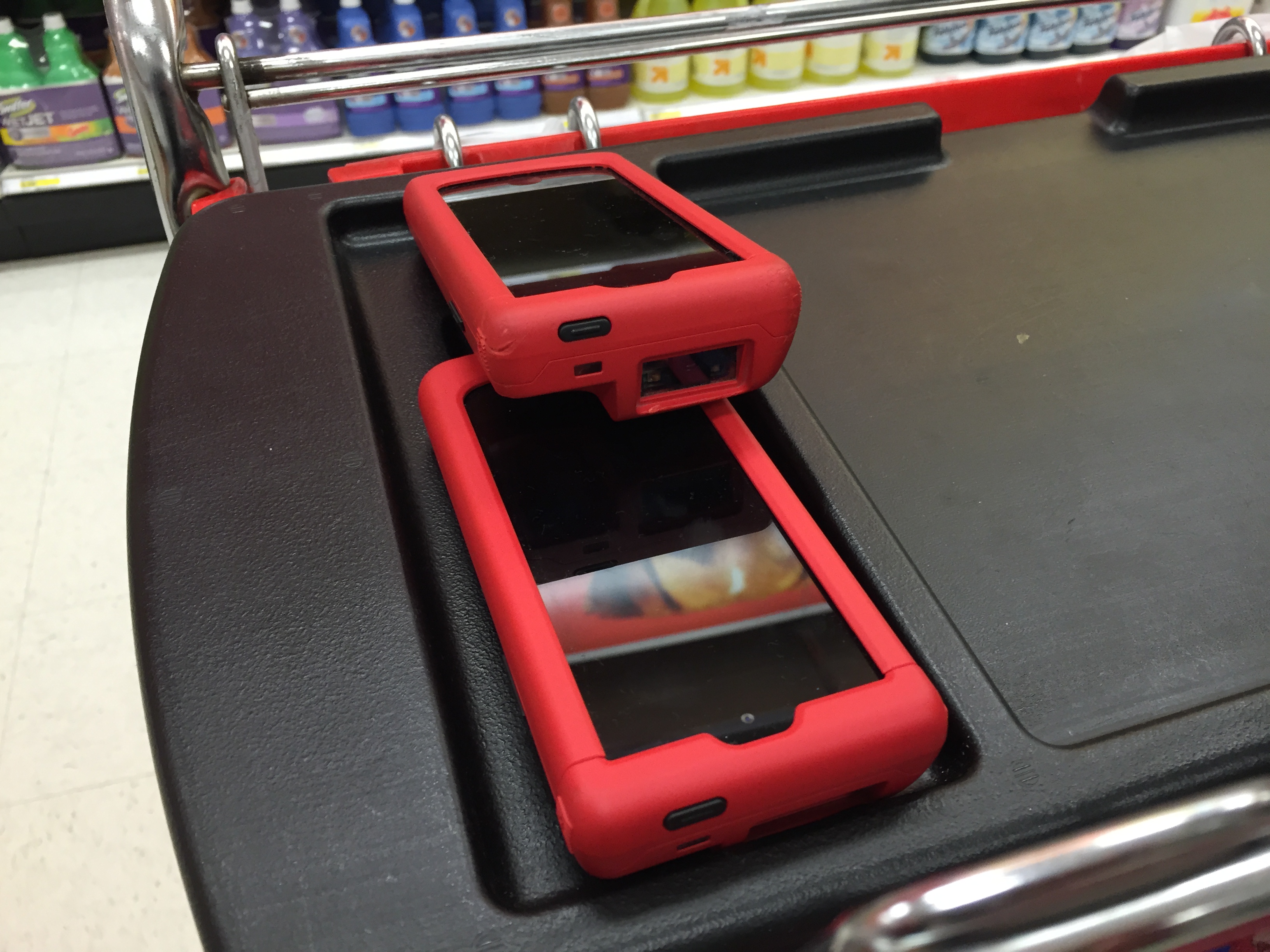
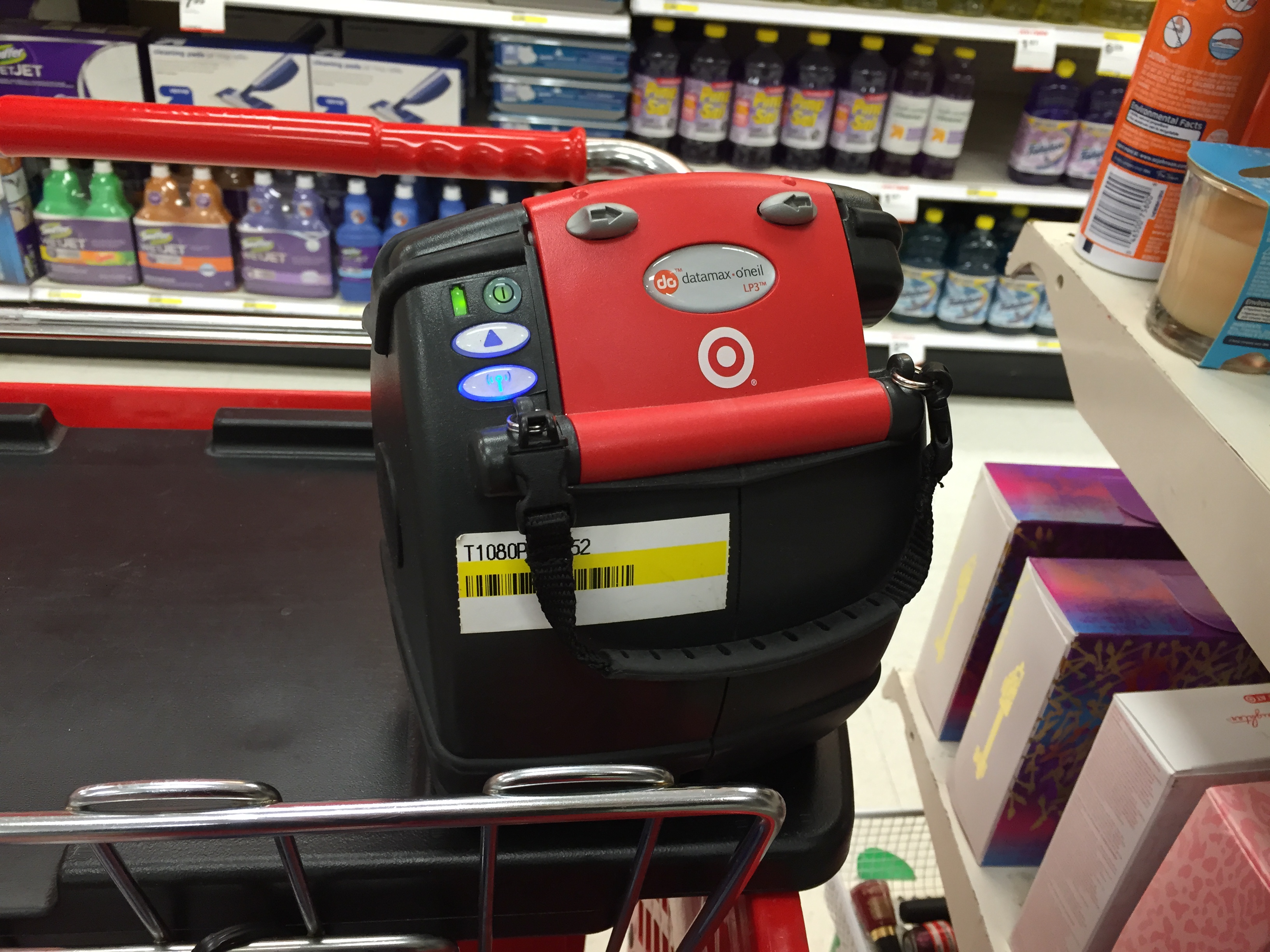
Target is no stranger to technology. They use iPod touch in custom cases with barcode scanners built in to manage inventory and print tags for the shelf with a wirelessly paired printer.

iPod touch with scanner

Wireless label printer

Continue reading “Target’s new in-store tablets miss the bullseye”

redesignAnswer: If you’re selling birthday candles, put matches or a lighter nearby

photo (10)


This is another question that got a variety of interesting answers.

What I was going for is to put matches or lighters near the candles. If you’re rushing to get party supplies, you want the toothpicks that say “Happy Bday,” candles, balloons … and something to light the candles with. There isn’t even a note that says where the matches are. I had to find someone to tell me they were all the way on the other side of the store.

Other comments from the survey:

  • The items are pushed back. They should be close to the front of the peg.
  • There is no alignment among the different items.
  • Candles are on two pegs. But the top peg is clearly intended for something else. At $1.57 vs. $2.79, people would be upset.
  • Green is an ugly color for a background.

Although the focus of the question was on the retail display, I’d also fix the packaging/bundling.

For the candles, I’d include a few matches. Maybe use the back of the card for a striker.

The sparklers (the black things) look ridiculous and boring. From a distance, you have no idea what they are. I’d have a background with sparkles on it.

Our Victor Marks writes:

Use planogram software that reflects the actual size of items on the peg. The black item is taller and throws the whole display off. Also, don’t put pegs up so high that they ruin your header decoration (party)


redesignAnswer: There’s no reason for Walgreens to put gift cards behind the counter

From Skitch


There is a lot wrong with this display. But the biggest thing is that there’s no reason to put all of those gift cards behind the counter.

Gift cards are worth nothing until they are activated. There’s no reason to put them in a “secure” area. Many of these are impulse purchases. They should be placed somewhere prominent (endcaps are the most frequent placement) so people can browse them and find just the right gift card for the person they are buying for. Cigarettes and other high value items should be behind the counter; not things that have no inherent value.

Other things that are wrong with this display:

  • It looks like a cluttered mess.
  • There’s no discernible organization to the gift cards.
  • From a visual perspective, having the ToysRUs gift card hanging off on an acrylic shelf is ugly.
  • There’s a sign saying that gift cards are cash only. Walgreens POS is programmed to let store gift cards be sold by credit card.

This is among the worst Walgreens that I’ve been to. The overall merchandising at this store is poor.

Most are much nicer. Walgreens also does a great job at picking the right merchandise for each location — much better than most retailers.

redesignAnswer: The tab is broken because I waited 15 minutes for “service” and gave up

Cable with tag torn


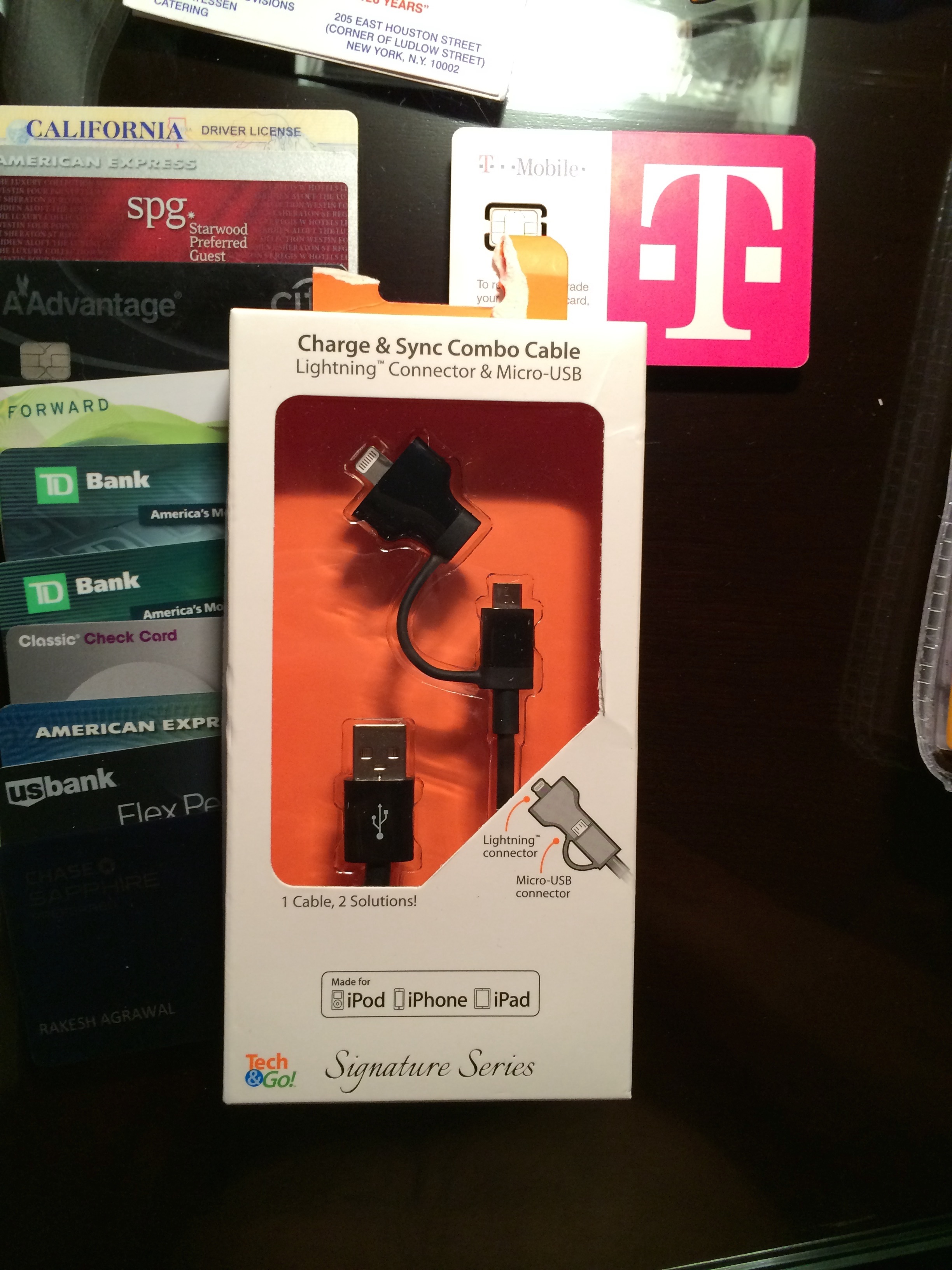
The tab on this cable is broken because it was locked to the peg. There was a customer service button to press; I pressed it. A store clerk walked by but didn’t have the key; I asked her to find someone who did. 15 minutes later, I gave up and ripped off the tab. (I did pay for the merchandise.)

But most consumers wouldn’t wait more than 2 minutes. So this “security” measure deters sales.

It also doesn’t deter theft! If someone wants to steal it, they can just do what I did. Another alternative is to pull the peg entirely out of the peg board and remove it from the back.

So you’ve made it hard for legitimate customers to buy the product while only adding a speed bump for thieves.

This is also a case where the maxim about letting your data make your decisions falls flat. Such analysis ignores what you can’t measure. In this case, it is lost sales. You can measure theft — number of units put on display minus number sold. Measuring opportunity cost — the units you didn’t sell because people didn’t want to wait — is harder. (Though it can be done.)

Opportunity cost in this case is especially high because this a high margin product. Every lost sale hurts more than every theft.

Of course, Walgreen’s could improve service levels so that someone would actually come and unlock the product. But that requires more staffing.

Another answer, which Sam came up with, is that the item was on a peg with assorted merchandise. Rather than slide everything out to get to the one she wanted in back and then slide everything back on, she’d just rip the tab for the one she wanted.

redesignQuiz: Why is the tab torn on this cable I purchased from Walgreens?

Difficulty: Moderate

Cable with tag torn


Why is the tab torn on the packaging of this cable?

Answer here.