
Difficulty level: Easy.
What do I use the paper clip for?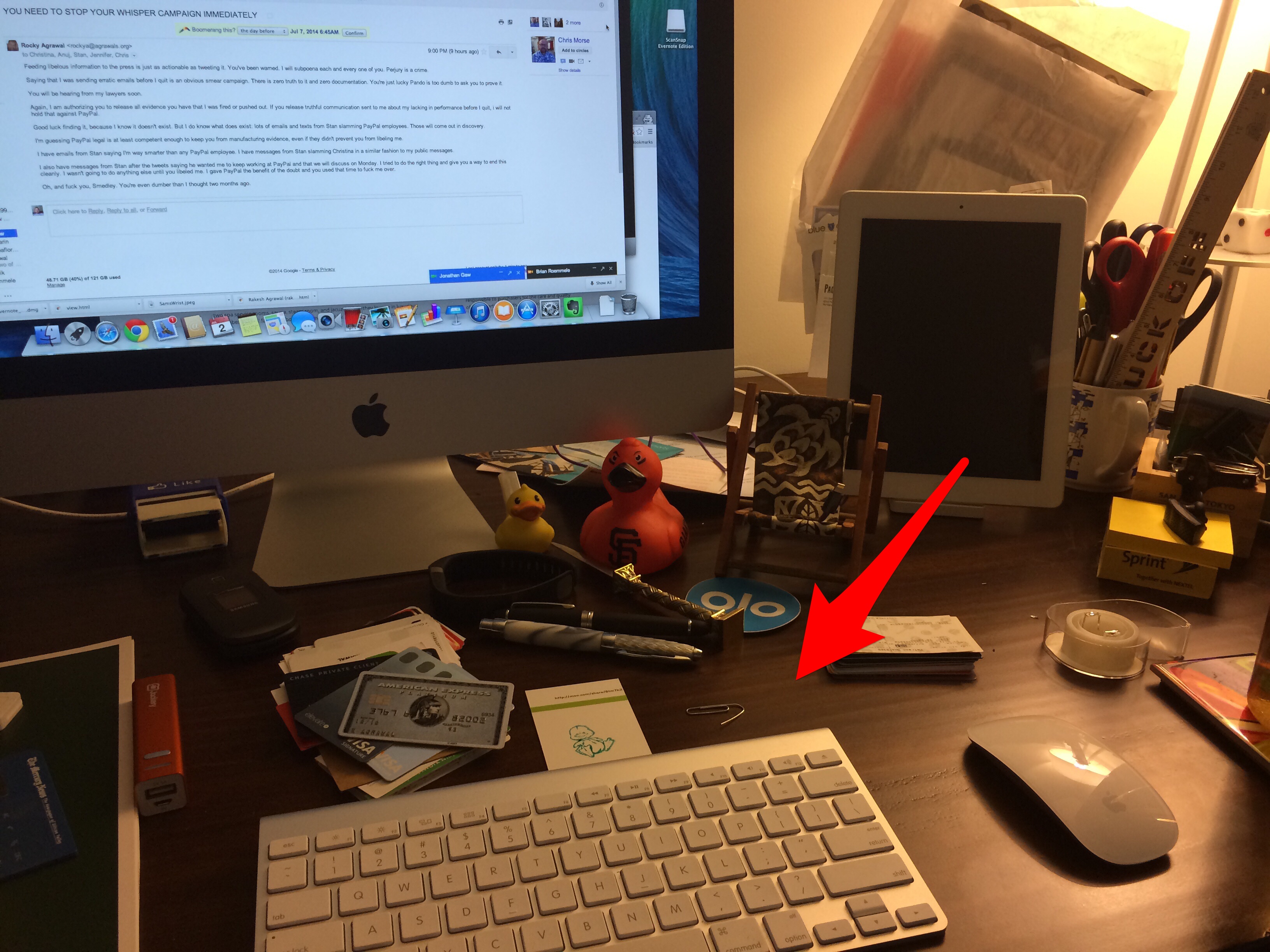
Difficulty level: Easy.
What do I use the paper clip for?
The key to solving this puzzle was checking the dates and the times.
Airfares, as many people know, have advance purchase requirements. Although these vary based on market, these are generally 21, 14, 7, 3 and 1. The closer you get to the travel date, the higher the fares are. A 21-day advance purchase is usually the cheapest. It gets more expensive at 14 days, more at 7 and so on. (These are general guidelines; airfare pricing is mind-numbingly complicated.)
There are various systems that price tickets. (Known in the industry as GDSs.) These systems are based in different places. Virgin America uses Sabre. Sabre’s systems are in the central time zone. (Even though Virgin America itself is based in San Francisco and the flight was originating in Los Angeles.)
To me, the most logical way to test if you met the advance purchase requirement would be based on airport of departure. But it’s tested based on where the computers processing the ticket are.
My flight date was two weeks from yesterday.
So as soon as the clock struck 12:01 a.m. in Tulsa, Oklahoma, I didn’t meet the 14-day advance purchase requirements and Virgin America upped my fare to $140. But because Expedia’s tickets are processed on the West Coast, I still met the 14-day mark. So I got the 14-day advance purchase fare of $91, instead of the 7-day advance purchase fare of $140.
Difficulty level: Hard. But you can solve this without detailed knowledge of the airline industry.
Last night, I was trying to a book ticket LAX-SFO on July 14. I’m going to YxYY in Palm Springs and need a way to get back home. Around 9:55, I did a Kayak search, as I often do, to start the process. I saw that Virgin America had a fare of $91. I went to the Virgin America site and saw the $91 fare. After I selected the seat, I got a message that my seat was taken. I re-ran the search and saw that the lowest fare on July 14 was now $140. I checked on Priceline. Same thing.
I looked at the clock. It was now 10:03. I knew exactly what to do: I went to Expedia and booked the ticket for $91. In addition to inconveniencing me, Virgin America lost whatever they have to pay to Expedia.
Why was I able to book the ticket for $91?
Note that this is not a one-time fluke where there is a fare mistake. I have taken advantage of those in the past; I once flew roundtrip business class to London for less than $91.
If you’re in the travel industry, instead of commenting, please send your answer to redesign@agrawals.org.
The solution is here.
Whenever I shop, I do market research. Last night I was at the Apple Store in Union Square in San Francisco.
An increasingly common thing for retailers to do is ask for ID on credit card purchases. I’ve had this happen at major retailers like Target, Macy’s, Walgreens and Apple. It’s also really common just about everywhere in Vegas.
But according to card association rules, you can’t require ID to complete a transaction. When retailers ask me for ID, I generally say that they can’t require an ID.
There are some circumstances where they shouldn’t complete the transaction. Last night was one of them. I had accidentally grabbed the card that I had ordered for my assistant. It wasn’t signed on the back and my assistant has a very female name. The Apple store clerk clearly looked at the name and went ahead and sold me an iPad Air anyway.
I’m pleased to announce that I’m joining the advisory board of OLO. You can see the press release here. Forbes recently had a great write up of OLO.
OLO provides online ordering for companies such as Five Guys, Noodles & Co. and Cold Stone Creamery. Guests can order from their smartphones and pick up their order in store without waiting in line.
I met founder Noah Glass earlier this year and was very impressed by his commitment to helping restaurants incorporate mobile technologies.
Mobile has changed a lot of spaces already; I think there’s a lot of potential to improve the restaurant experience for both consumers and operators:
As I’ve noted repeatedly in my writings, local is a hard slog and OLO has shown the dedication and perseverance necessary to succeed in local. The company started off with mobile ordering by text message in 2005. It is also well financed, having recently received a strategic investment from PayPal as part of a $5 million round.
Noah and team are off to a great start and I look forward to working with them to help restaurants take advantage of mobile.
The WSJ reported Google is creating a watch and a game console. I discuss with Lance Ulanoff, Mashable, and the CNBC team on whether the company is spreading itself too thin.
I talk to Reuters about Square killing its gift card product less than a year after launch.
The gift card service “wasn’t a very well thought-out experience,” said Rocky Agrawal, payment and commerce analyst at reDesign Mobile. Agrawal said he tested the gift cards at several merchants and at least half of the businesses did not know how to redeem them.
Square may also have had trouble dealing with different state laws covering gift cards. In California, if a consumer has a balance of less than $10 on a gift card, merchants are required to refund that value in cash, according to Agrawal.
“Merchants didn’t know anything about that when I asked them,” he said.
Apple’s marketing head Phil Schiller remains confident in the company’s ability to innovate, with CNBC’s Brian Sullivan. Rakesh Agrawal, reDesign, and CNBC’s Herb Greenberg, provide perspective.
I talk to American Banker about how Google Glass could be used in payments.
For banks, certain Glass apps have obivous appeal, says Rakesh Agrawal, principal analyst at product strategy consulting company reDesign Mobile. Two possibilities: fraud prevention and detection and real-time transaction alerts.
Agrawal says the app submission process could be a boon for banks. “I would consider that to be a good thing,” he says. “You don’t want phishers. If they [Google executives] weren’t checking submissions, it would be possible for someone to submit a bogus Bank of America app just to get people’s passwords.”
I talk to Marketplace in advance of the Facebook phone announcement.

